
Urban E-Tribe
A service innovation project aimed at sustainable e-waste management in the city of London
Role:
Service Designer
Duration:
Nov 2024 - Dec 2024
Responsibilities:
Research, Team Management, Ideation, Systems Thinking
Context
Urban areas are struggling with e-waste mismanagement, driven by a lack of awareness, low trust in recycling systems, limited incentives, and fragmented access to product lifecycle information.
Brief
Design an actionable, sustainable service that encourages responsible e-waste disposal and extends the lifespan of electronic products.
Process
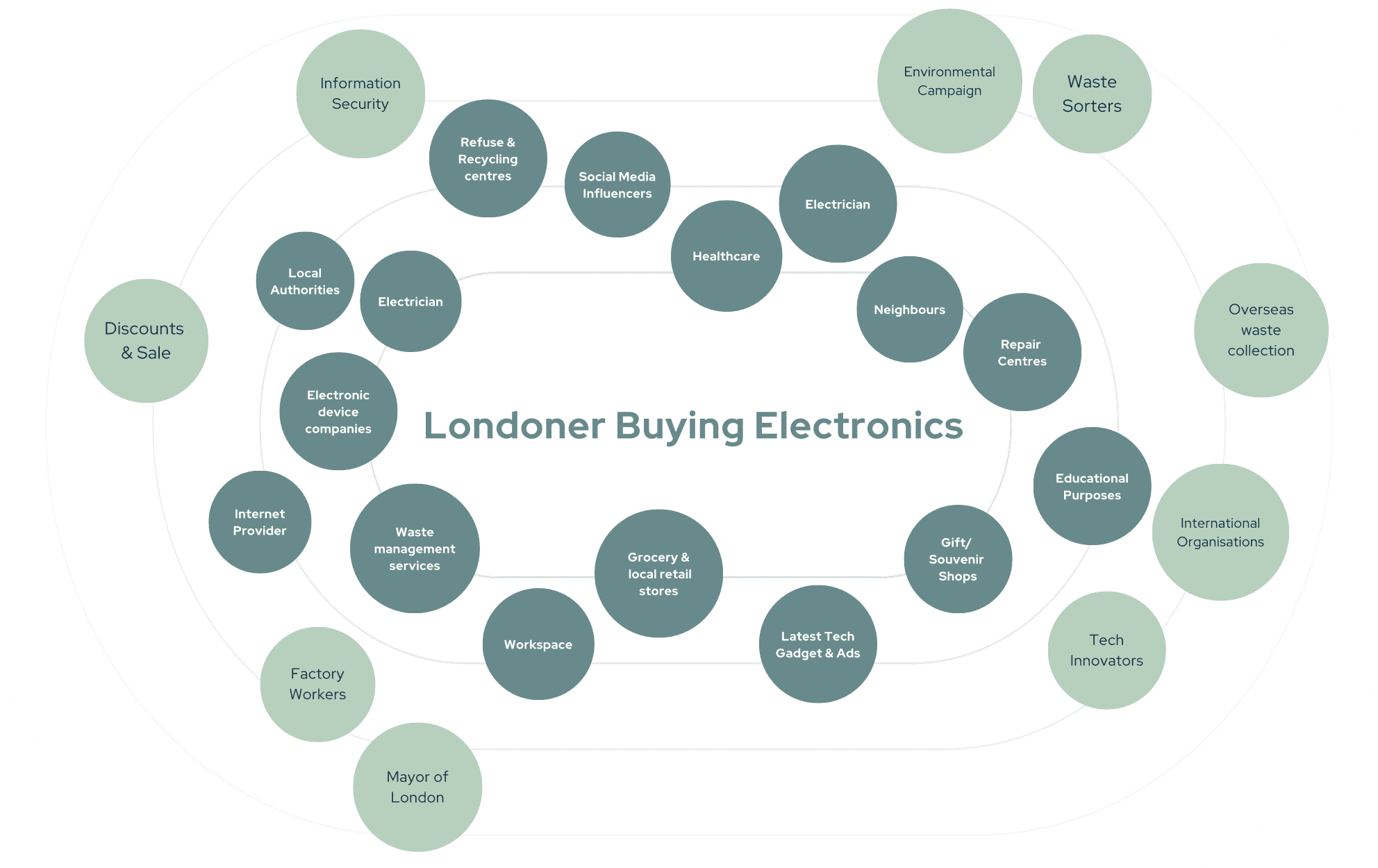
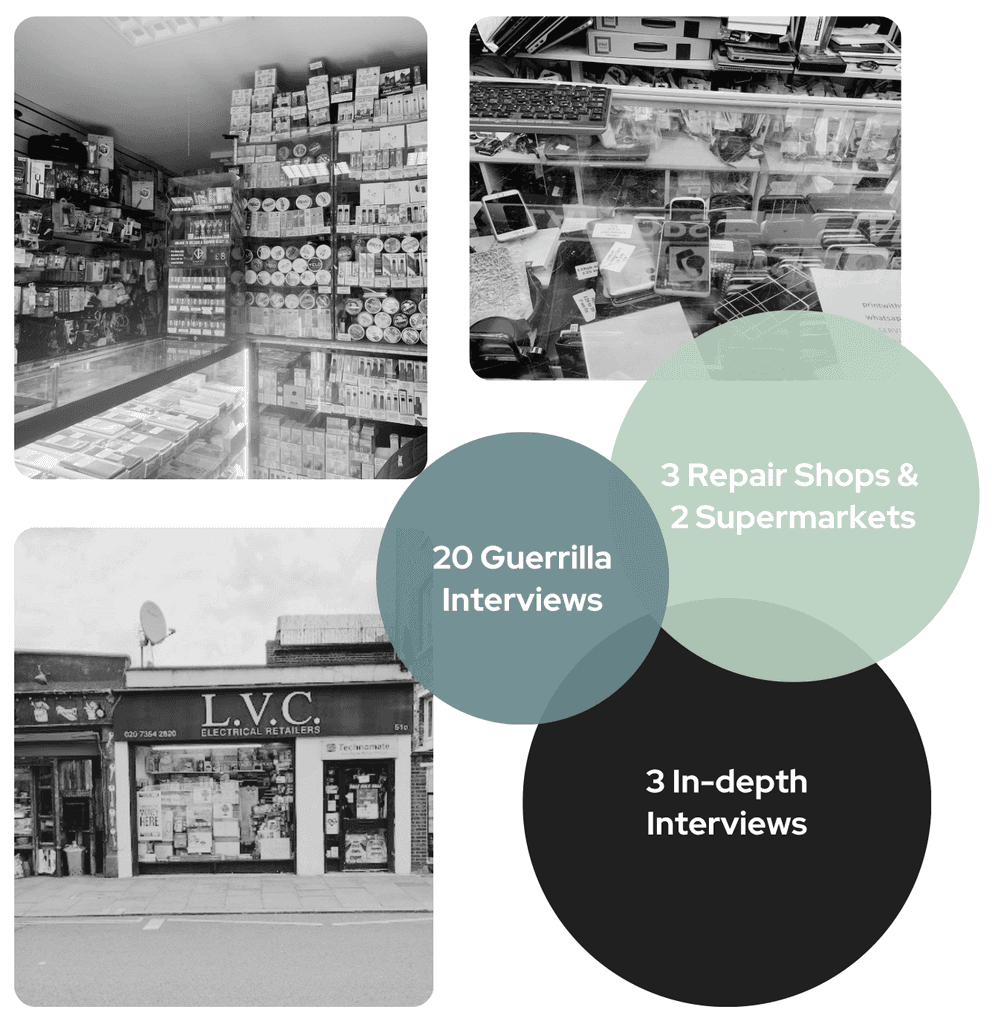
Ethnographic research conducted through field observations, surveys, and user journey mapping to identify behavioural barriers.
Design intervention at the individual, manufacturer, and community levels, a three-part system-based solution was suggested.:
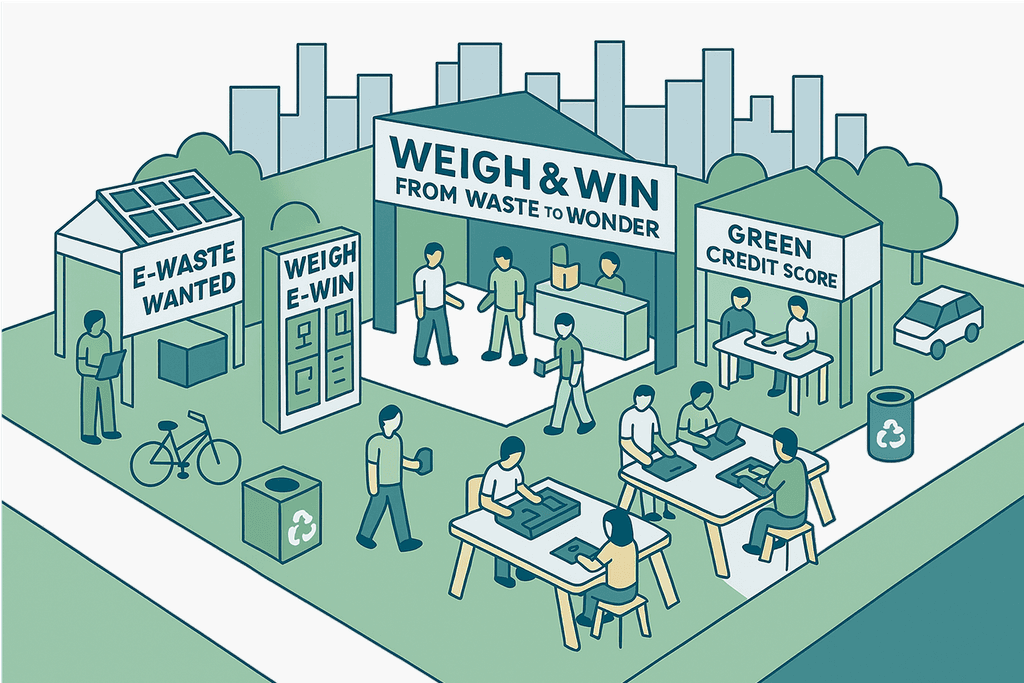
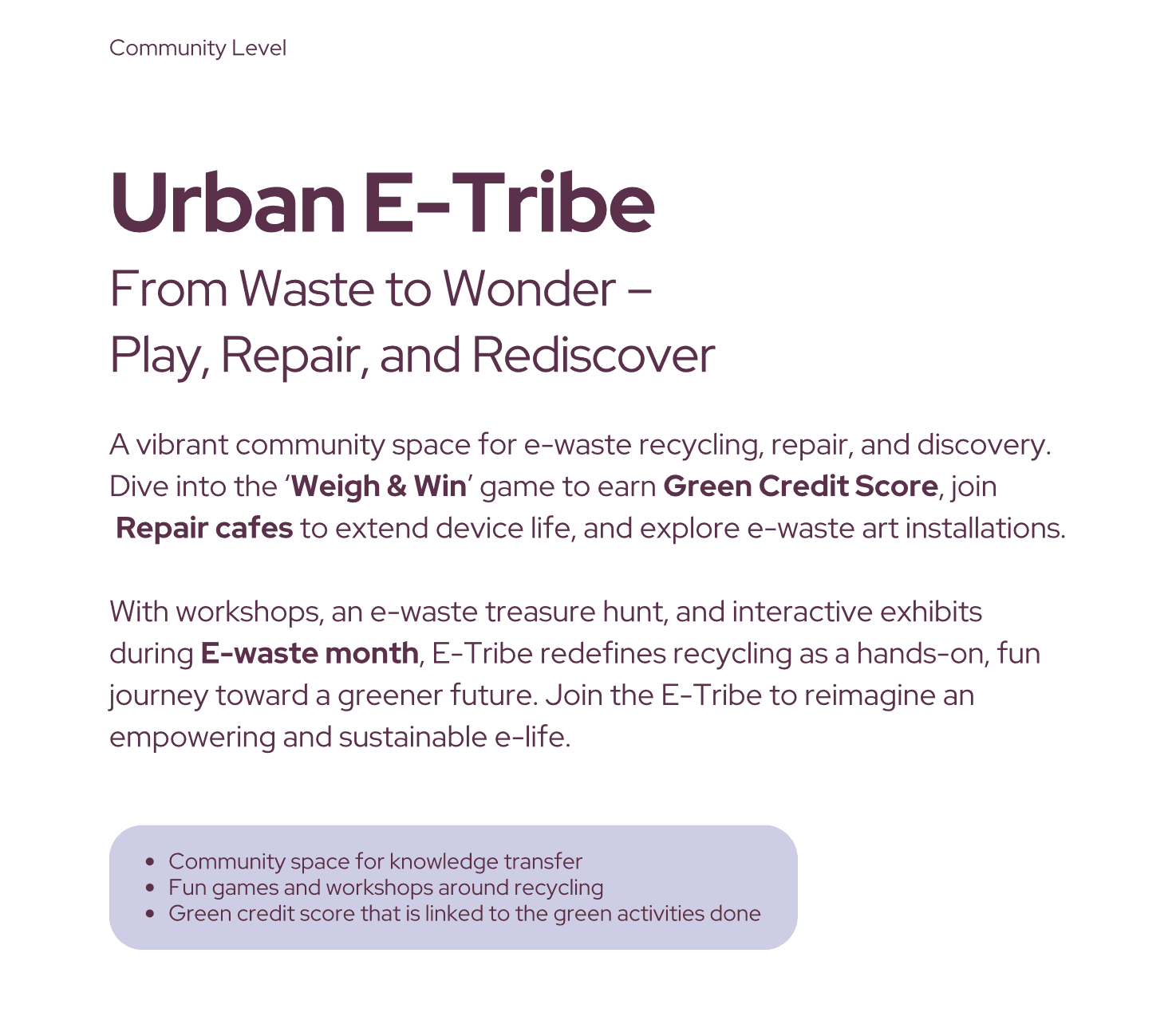
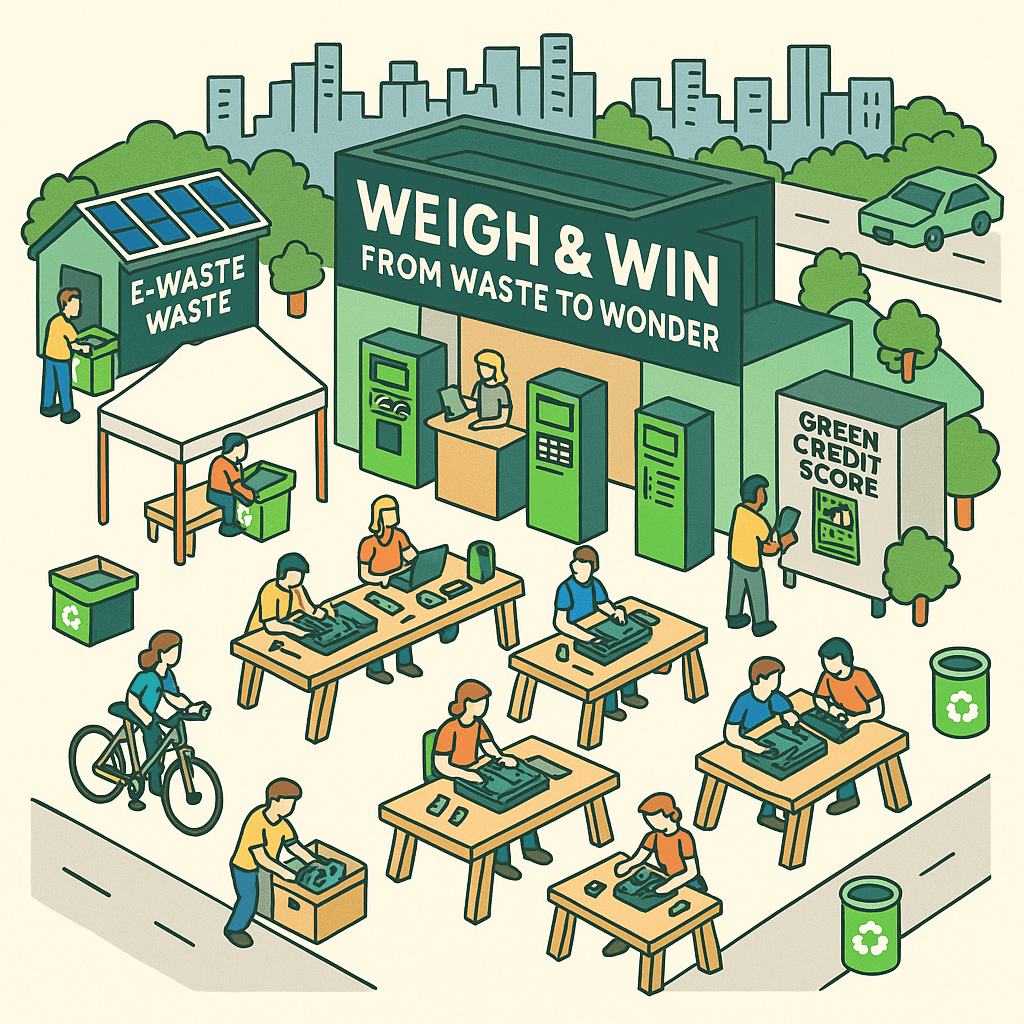
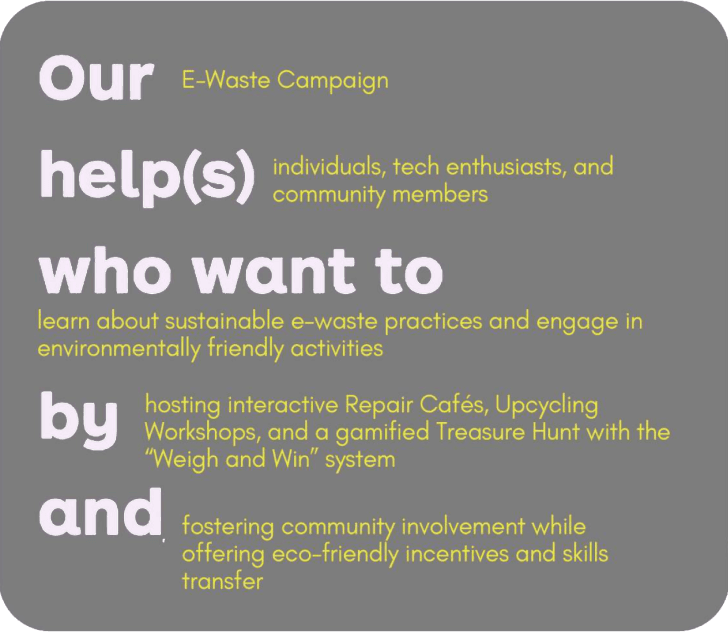
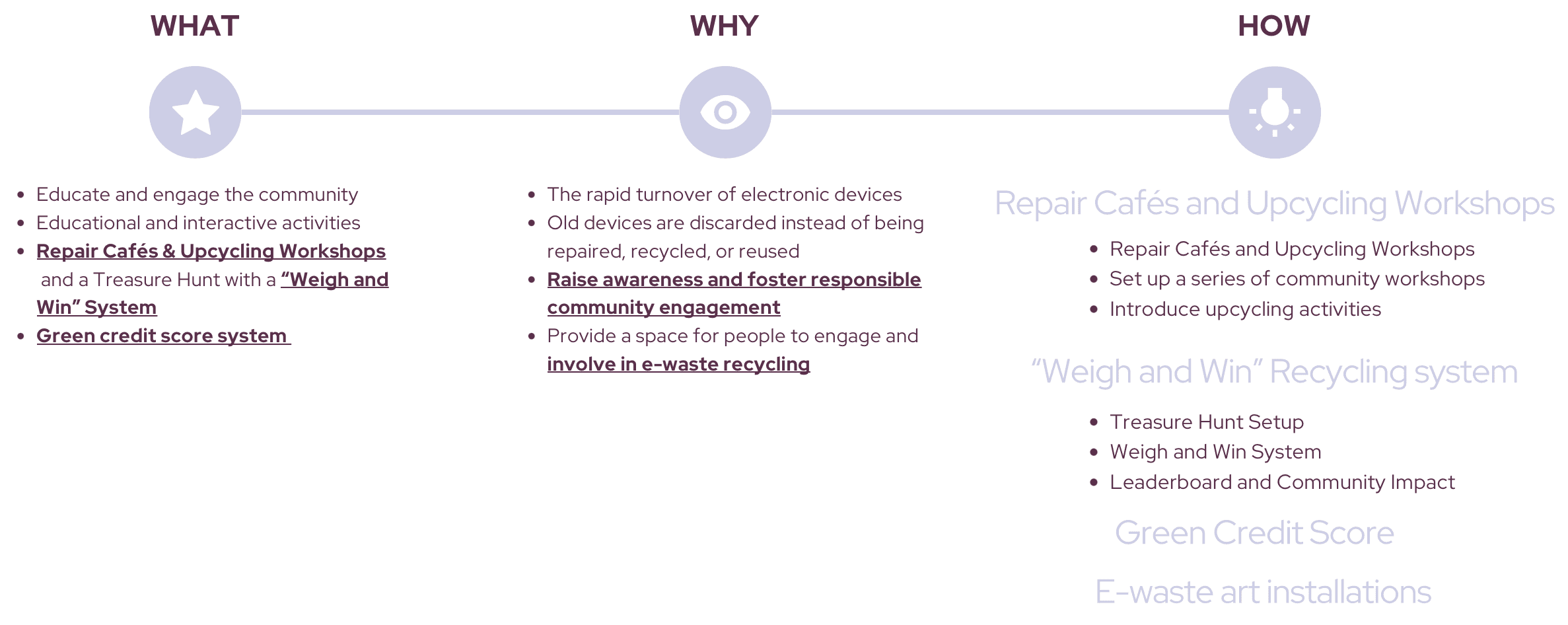
E-Tribe — a community hub for workshops, repair support, and recycling games.
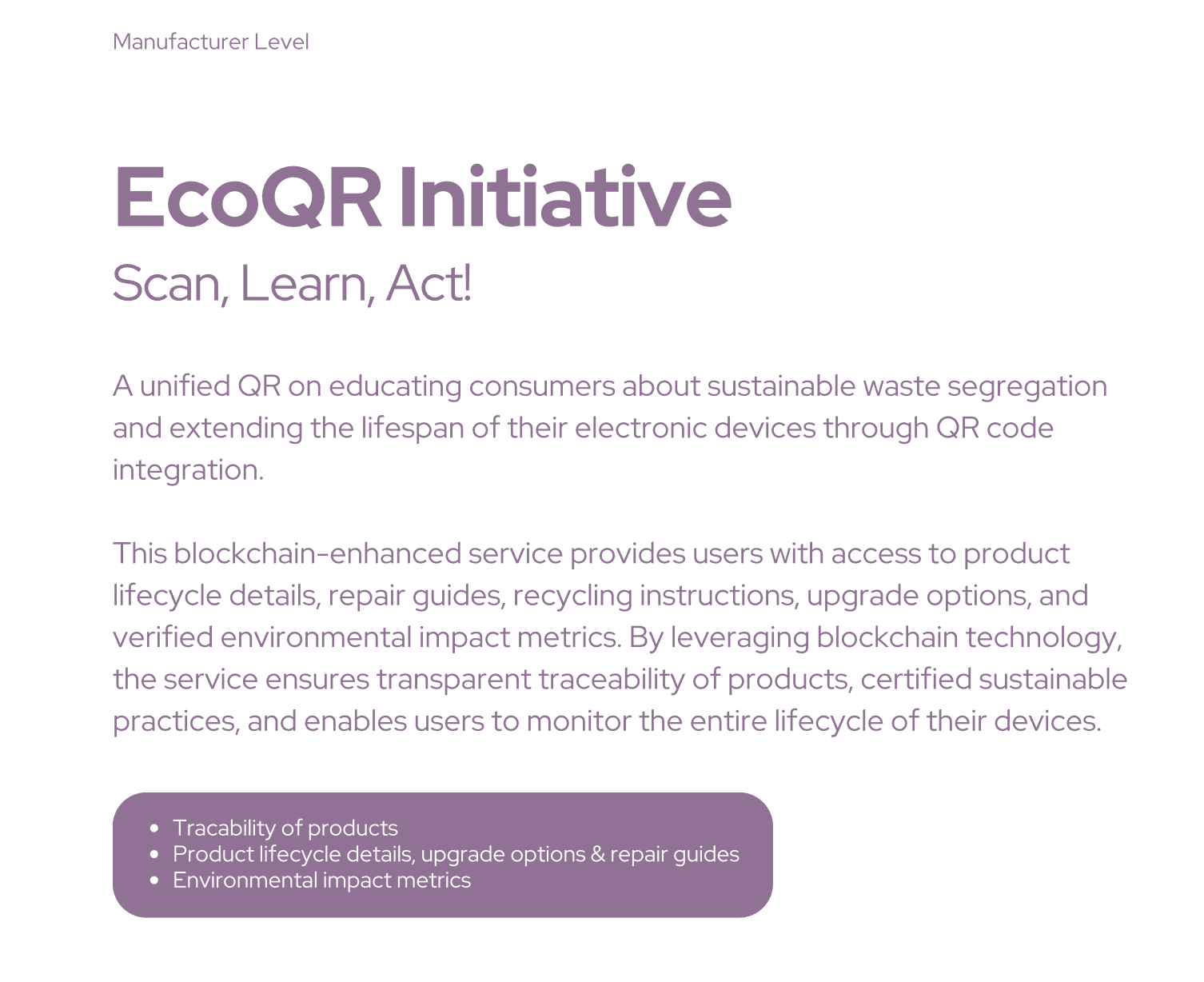
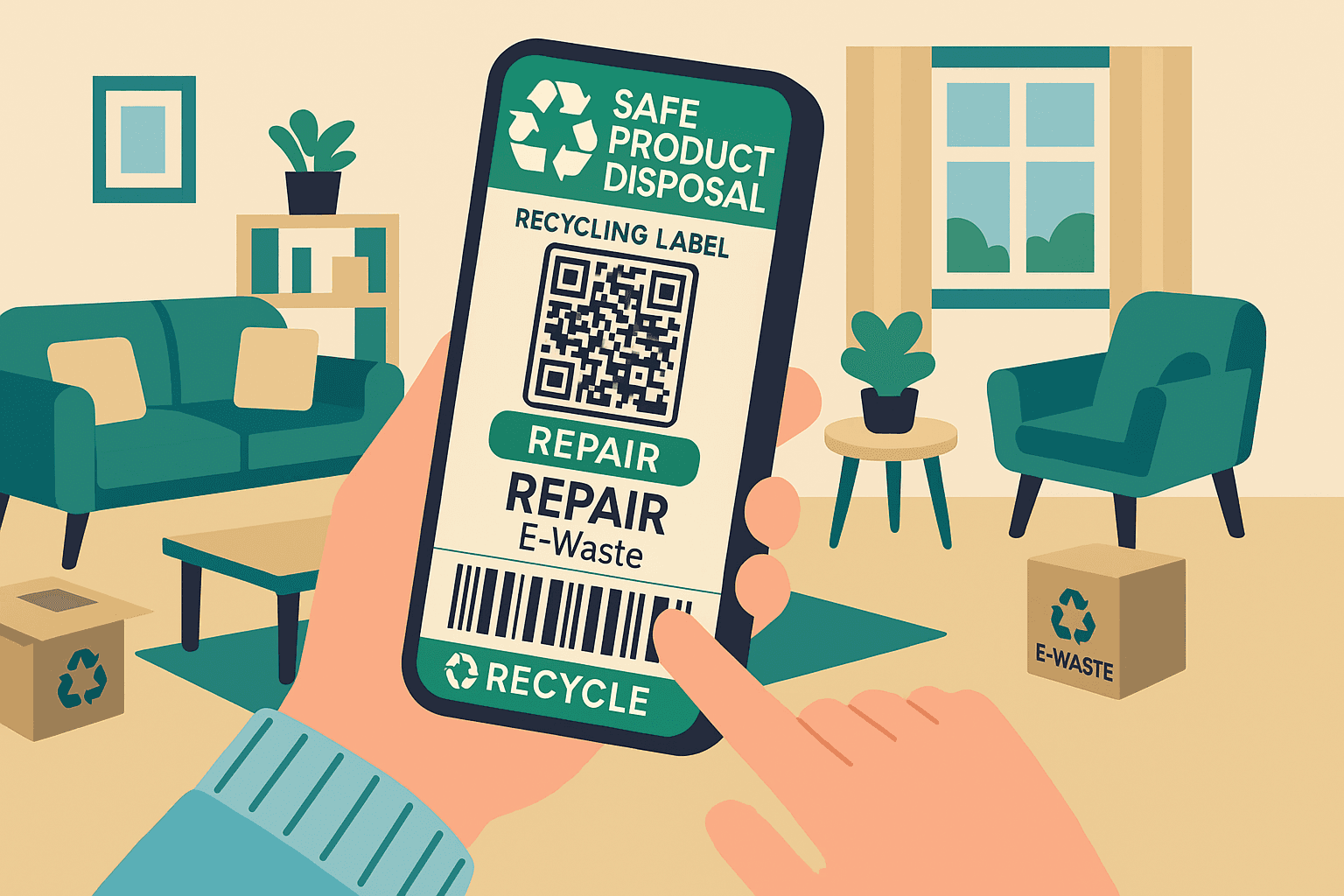
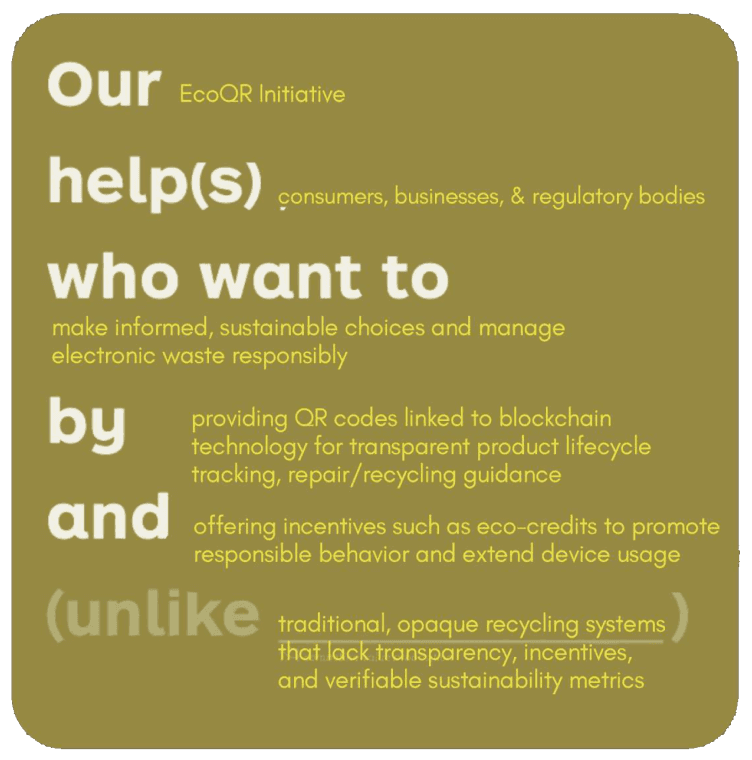
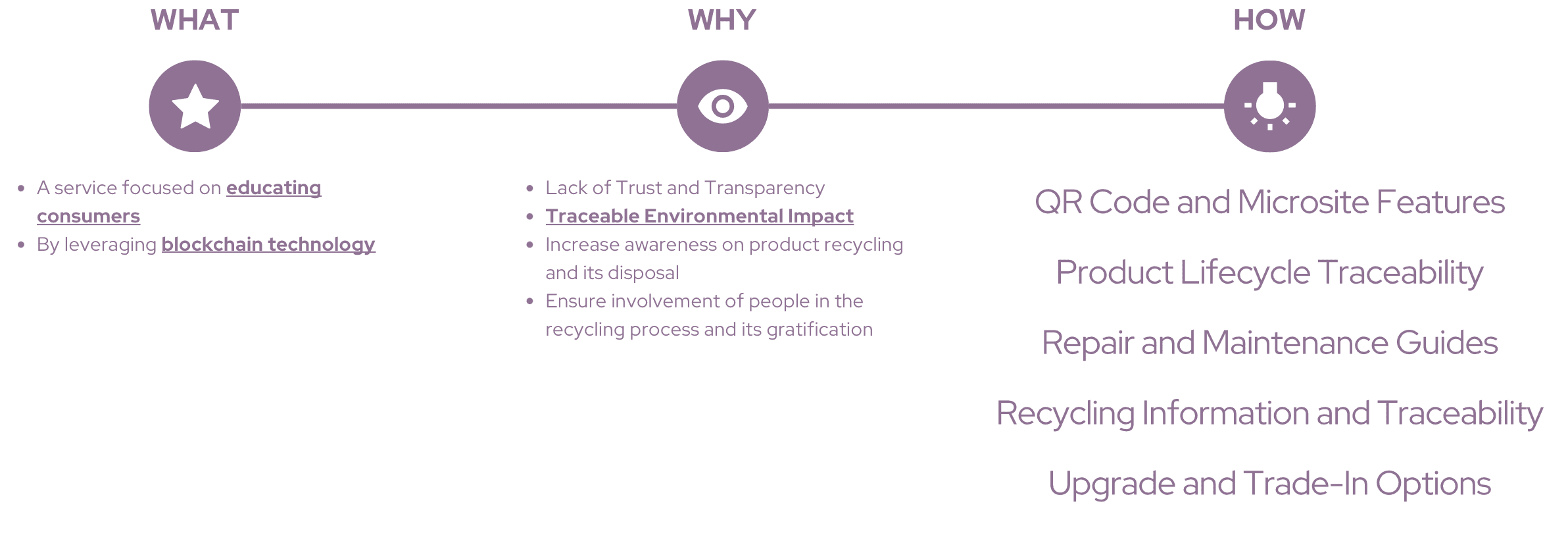
EcoQR — a unified QR-based tool for consumer education, repair access, and product traceability.
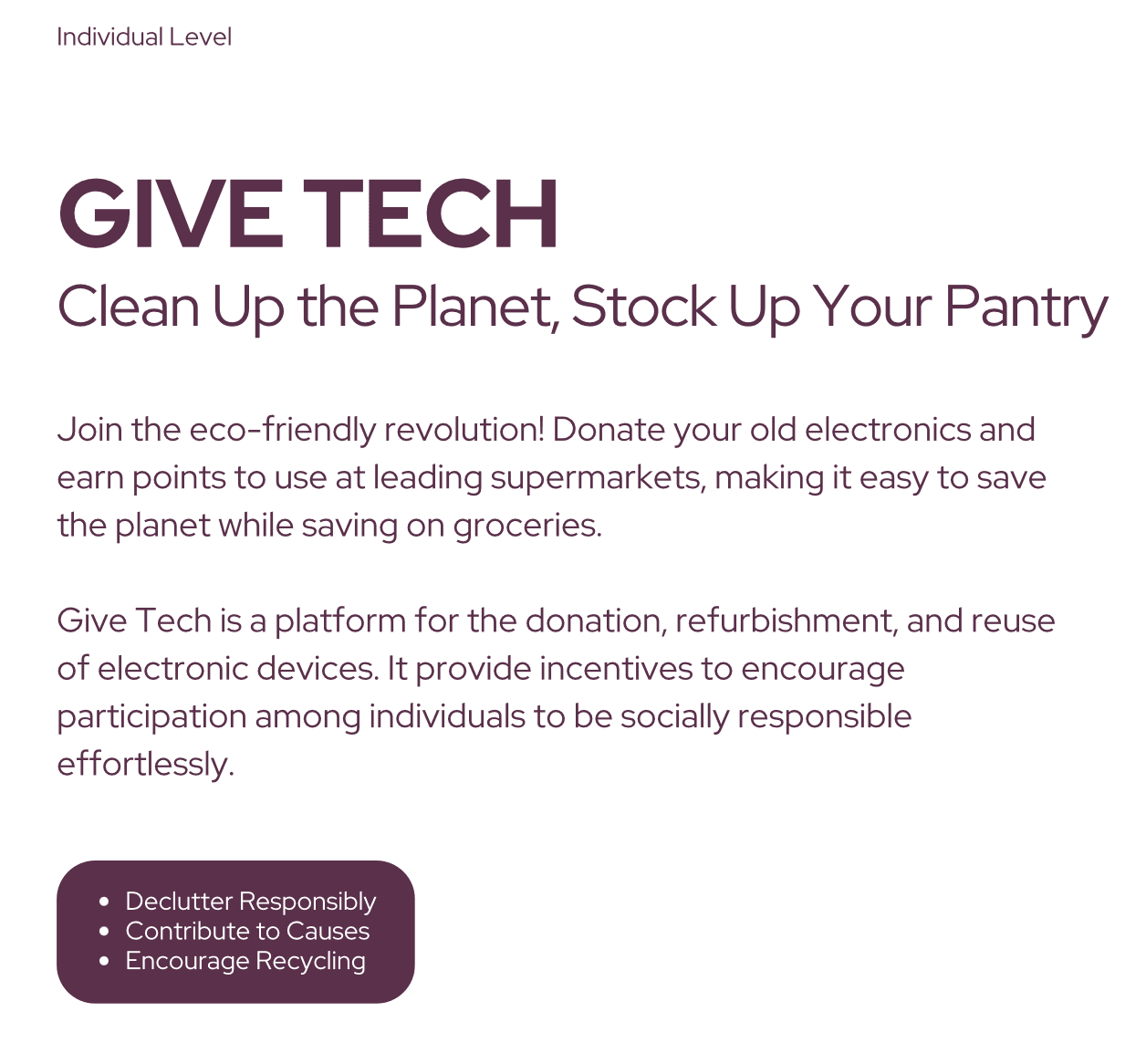
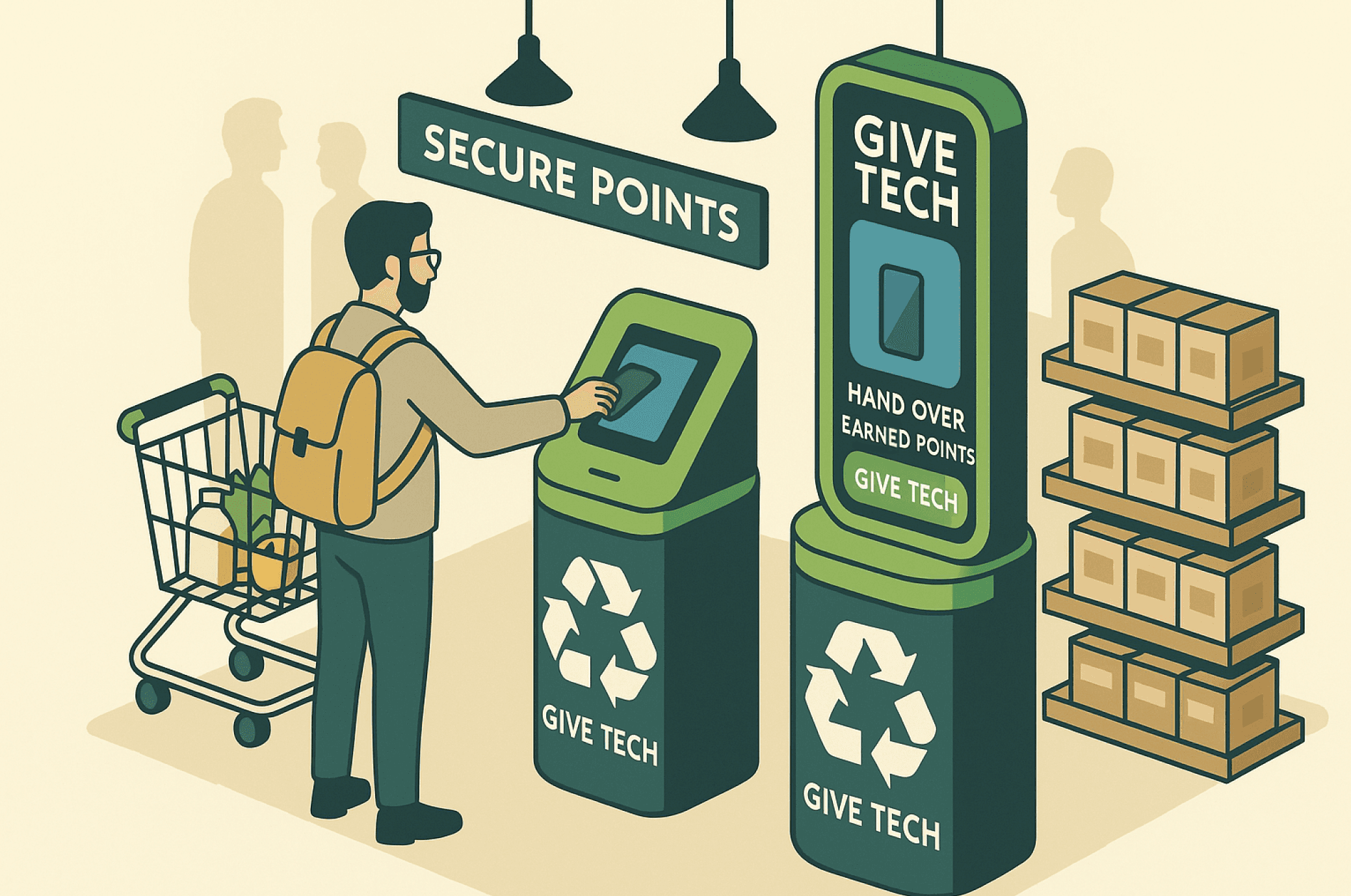
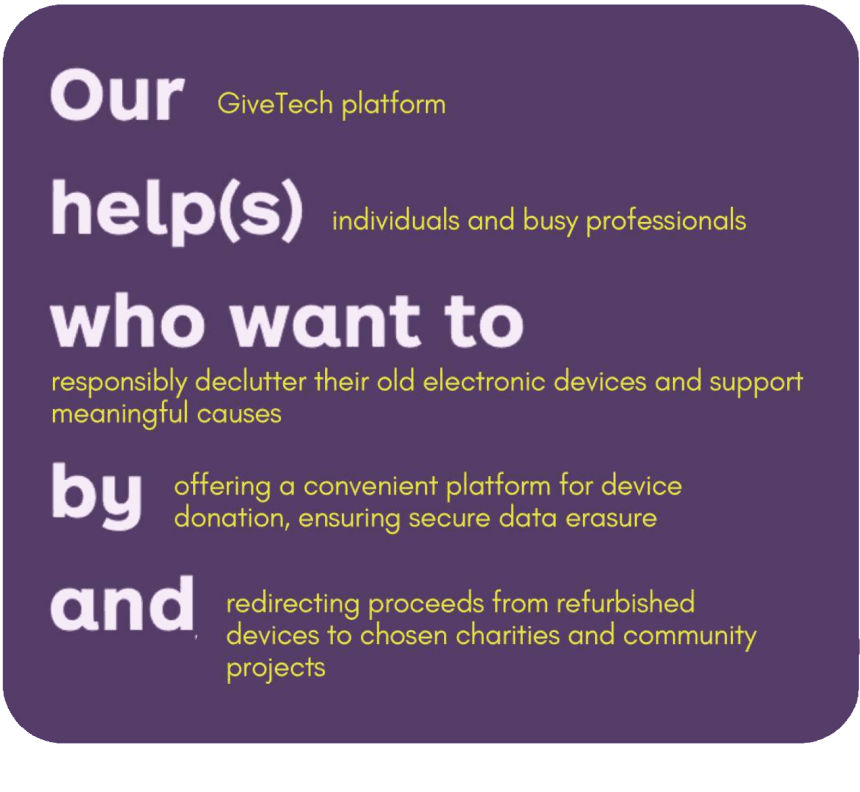
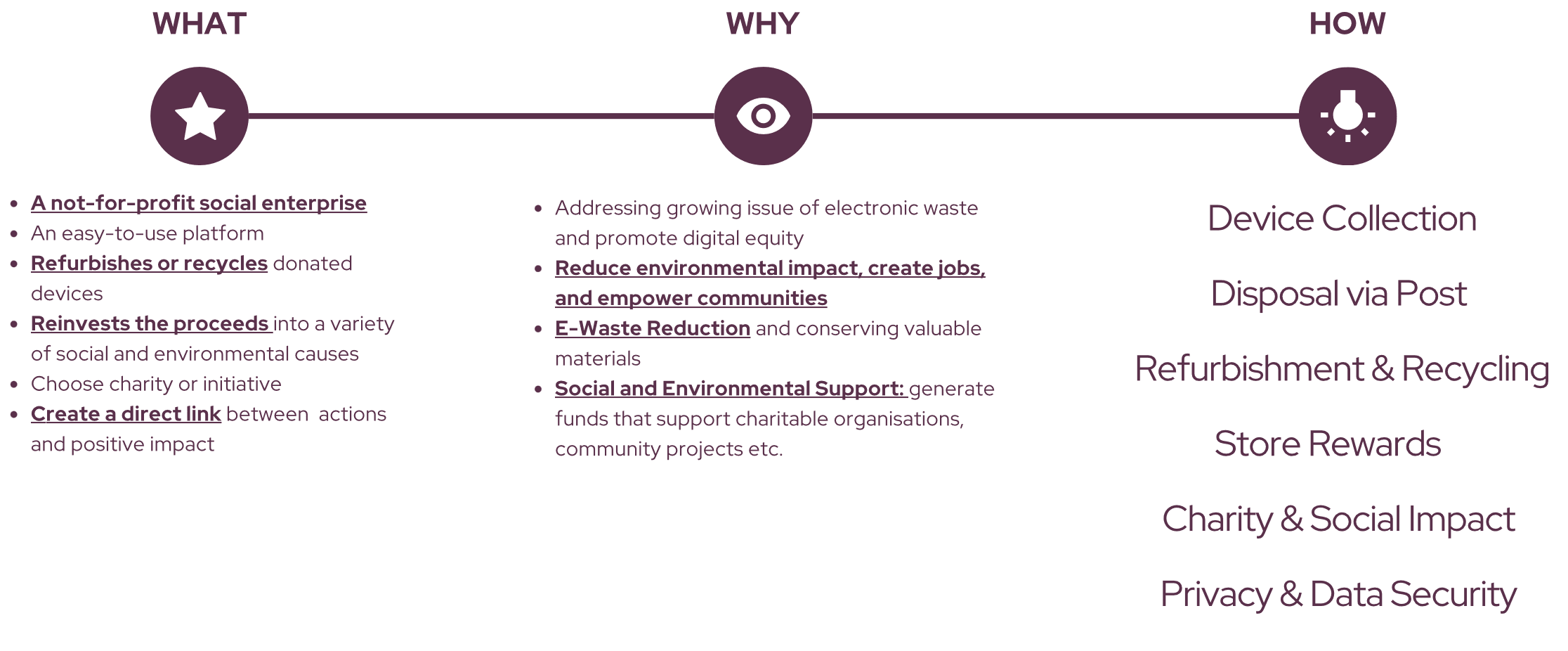
Give-Tech — a service promoting device donation, refurbishment, and reuse with tangible user rewards.
Behavioural engagement through integrated gamification strategies like "Weigh & Win" and e-waste treasure hunts to drive engagement across demographics.
Solution
Circularity Focus : The solution addressed critical barriers, improving awareness, trust, and participation in responsible e-waste practices. It fostered community-led circularity, extended device lifecycles, and proposed a replicable model for reducing urban e-waste’s environmental impact.
Climate Action & Sustainability
Knowledge Mapping
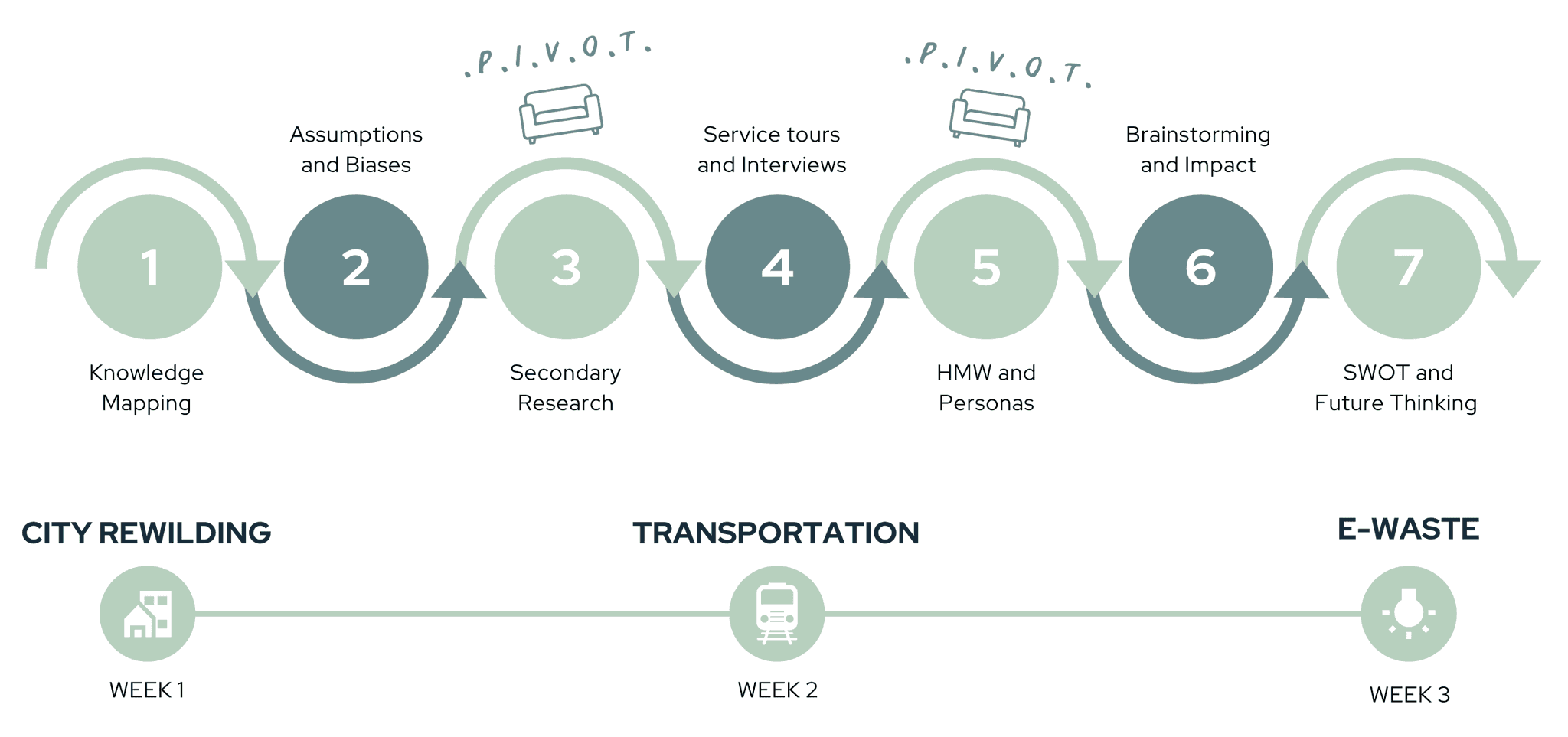
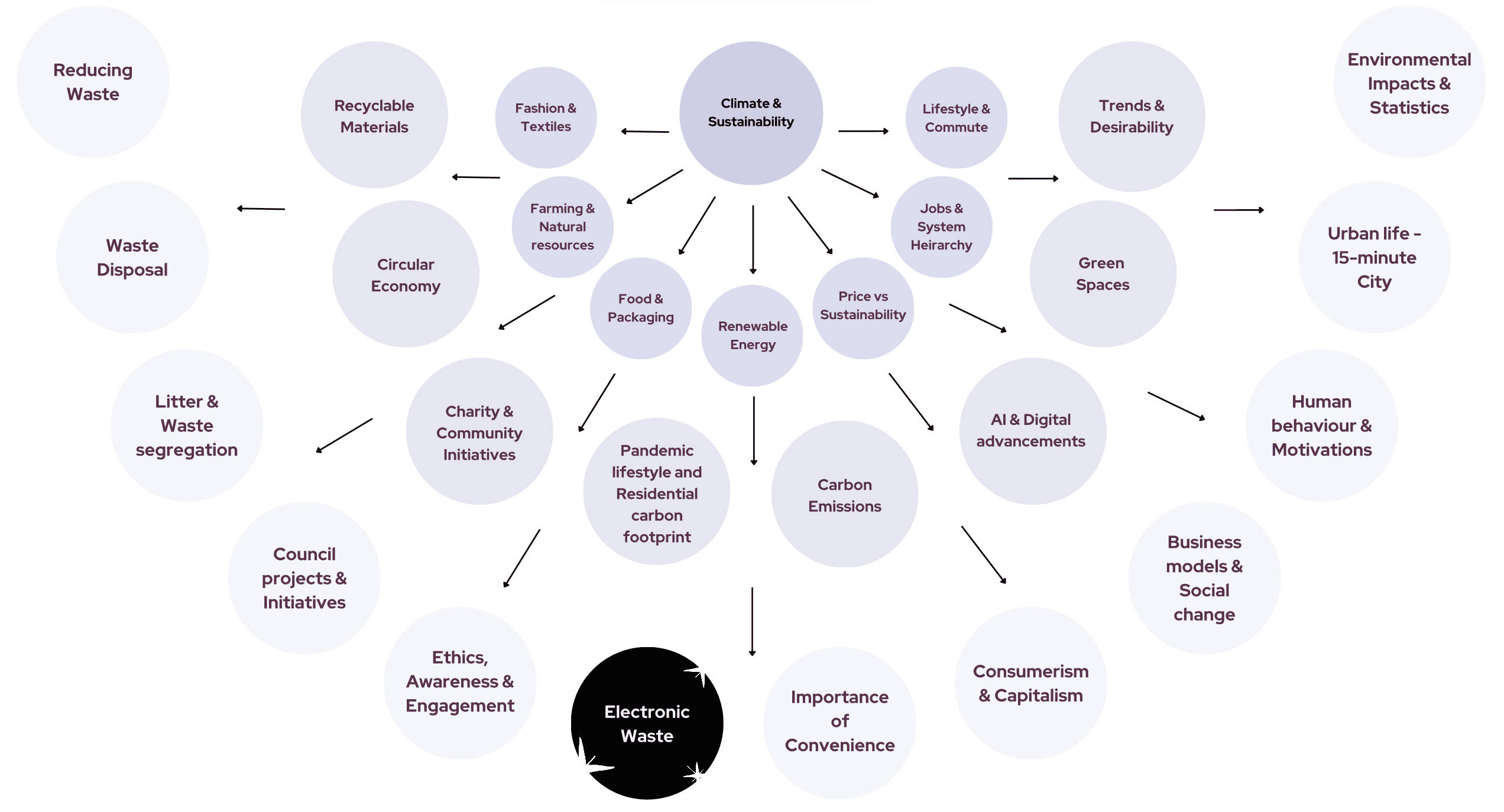
The project started with an extensive knowledge mapping around sustainability and climate change, where we finally focussed on E-waste for our research.
The team went through multiple topic pivots in an agile manner through phases of research, define and ideation.
E-waste
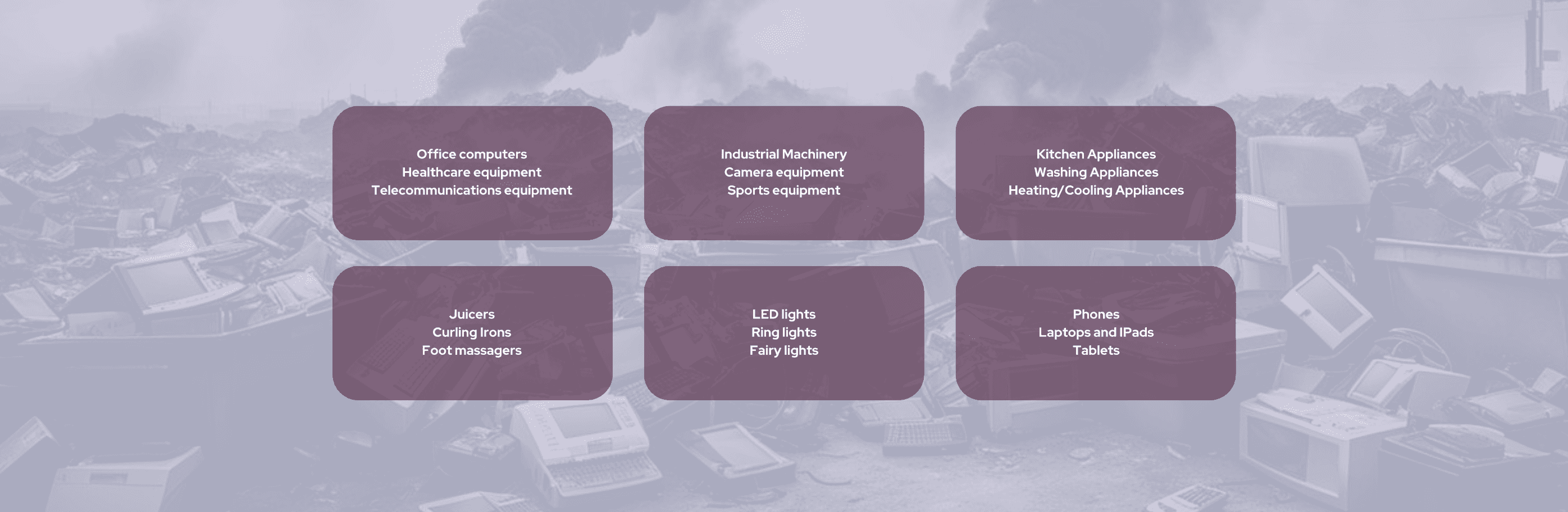
Types of E-waste
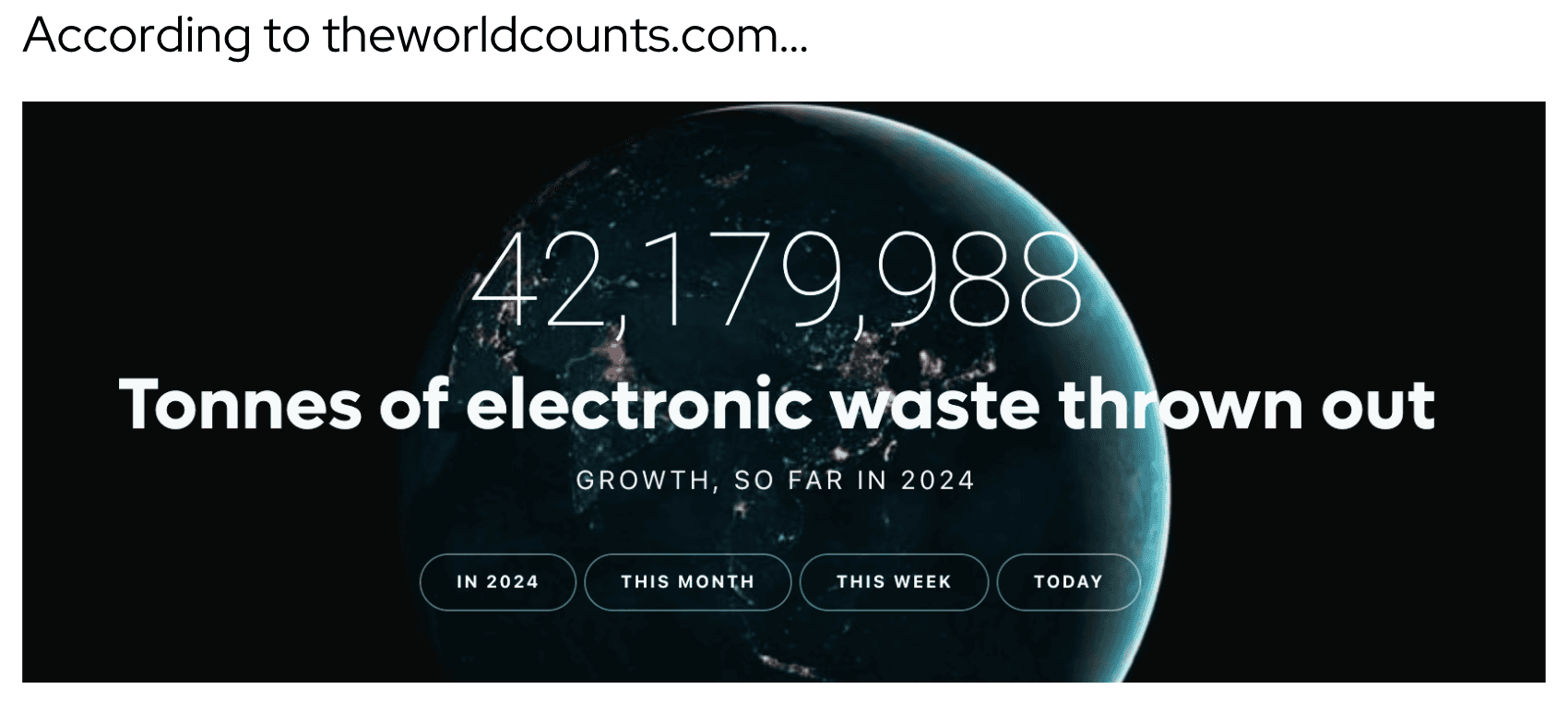
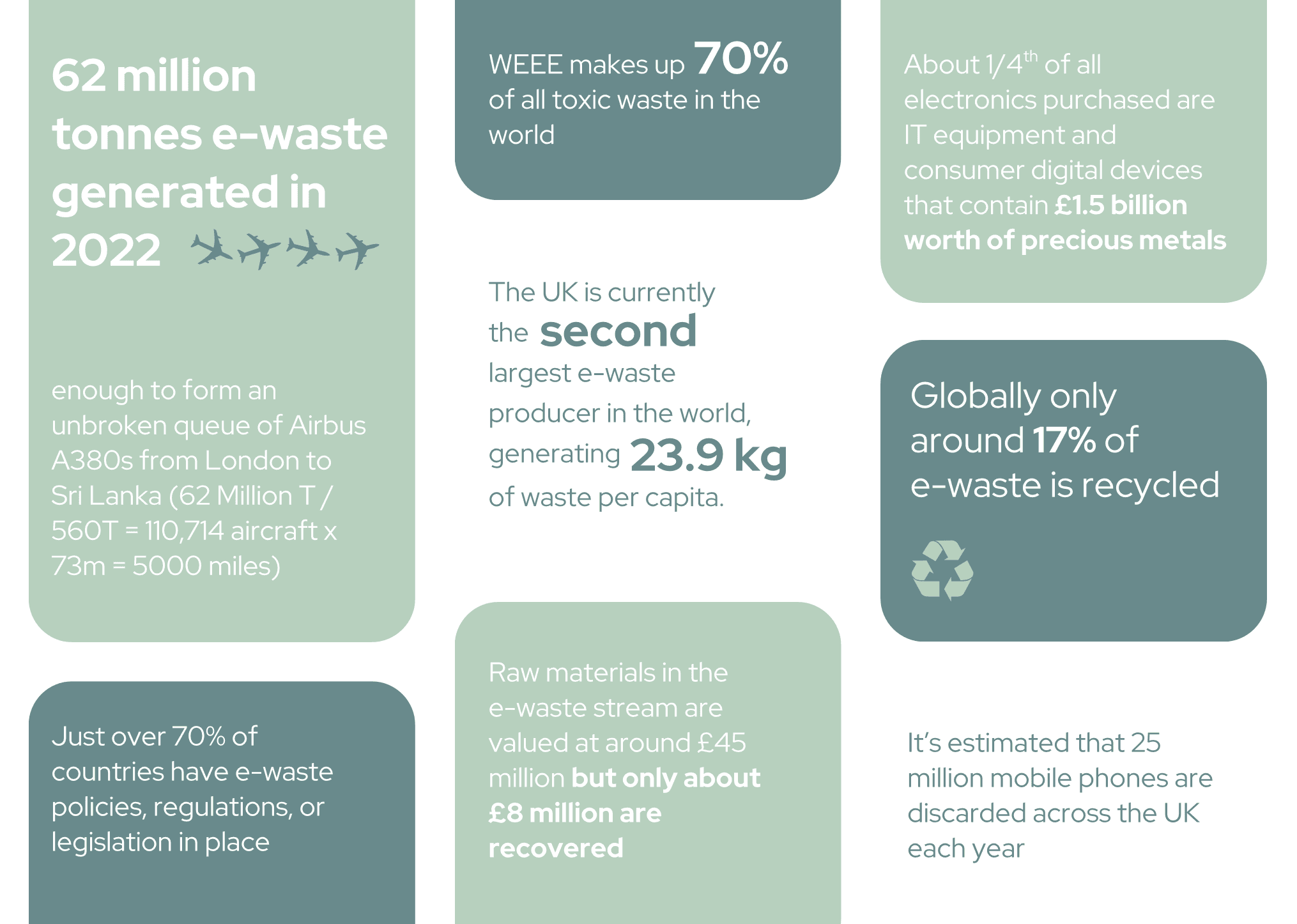
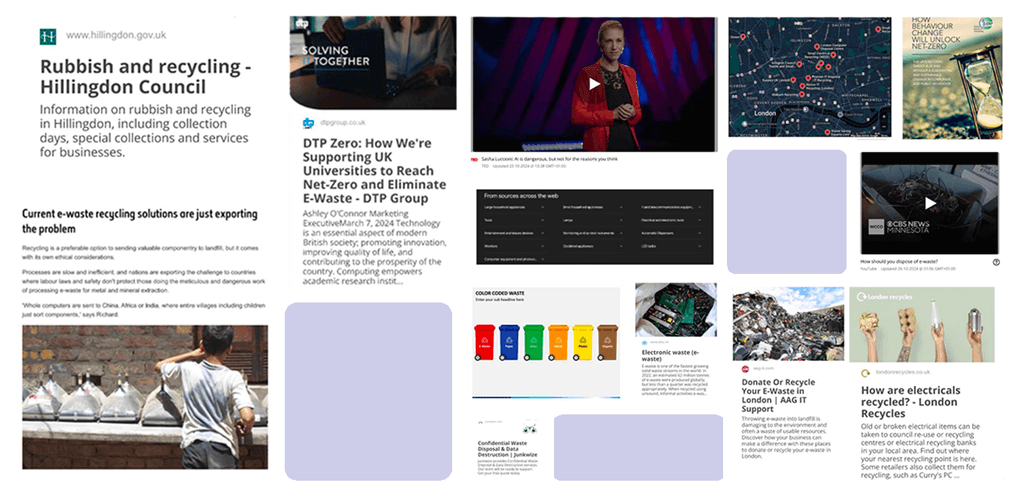
Secondary research
Netnography and Autoethnopraphy being the first steps of research, we designed our experience tours for primary research to capture more insights based on our preliminary assumptions.
The most common hazardous electronic items include LCD desktop monitors, LCD televisions, Plasma televisions, TVs and computers with Cathode Ray Tubes
The UK Government has set a target to achieve zero e-waste to landfill by 2030
Households produce more
than 400,000 tonnes of
e-waste each year
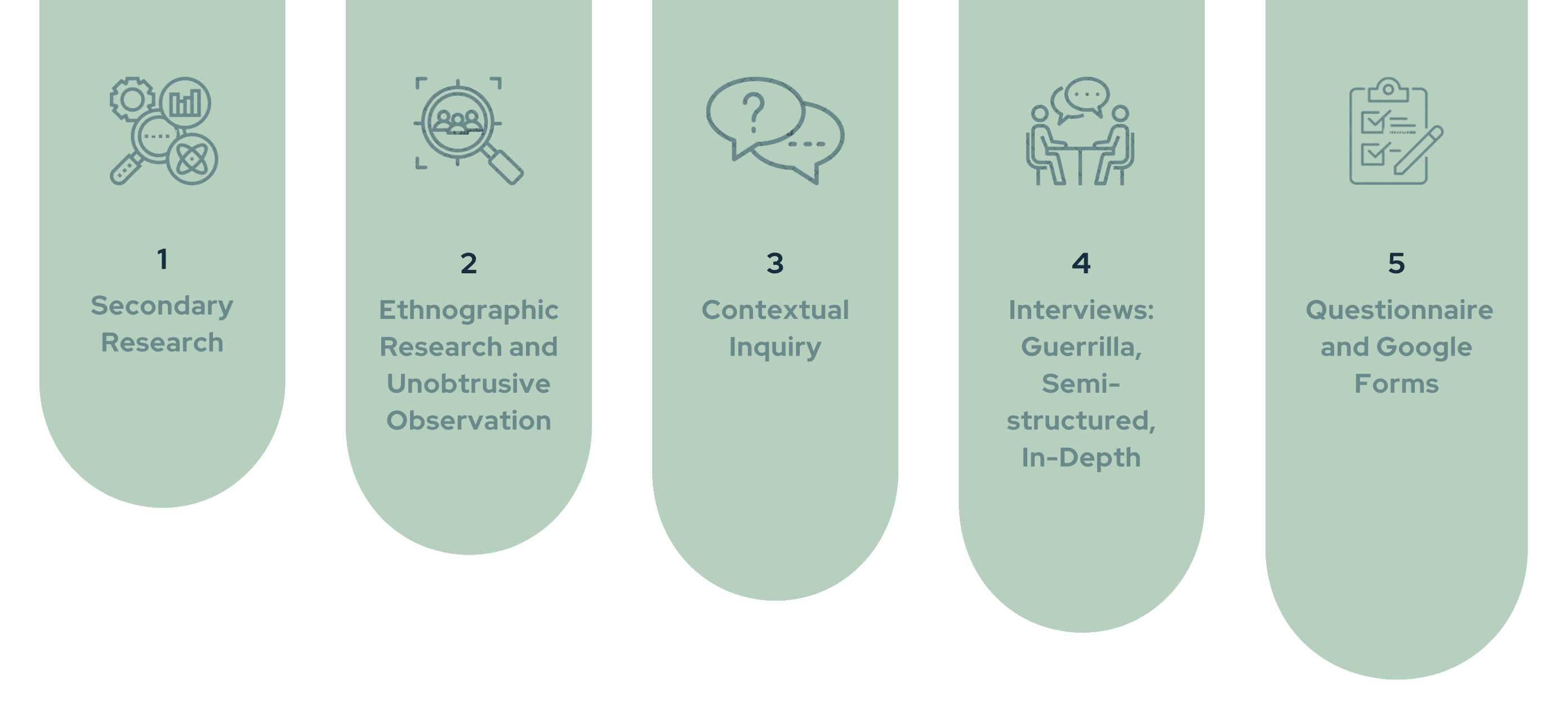
Research Methodologies
Qualitative & Quantitative Methods
Ethnographic Research
& Unobtrusive Observation
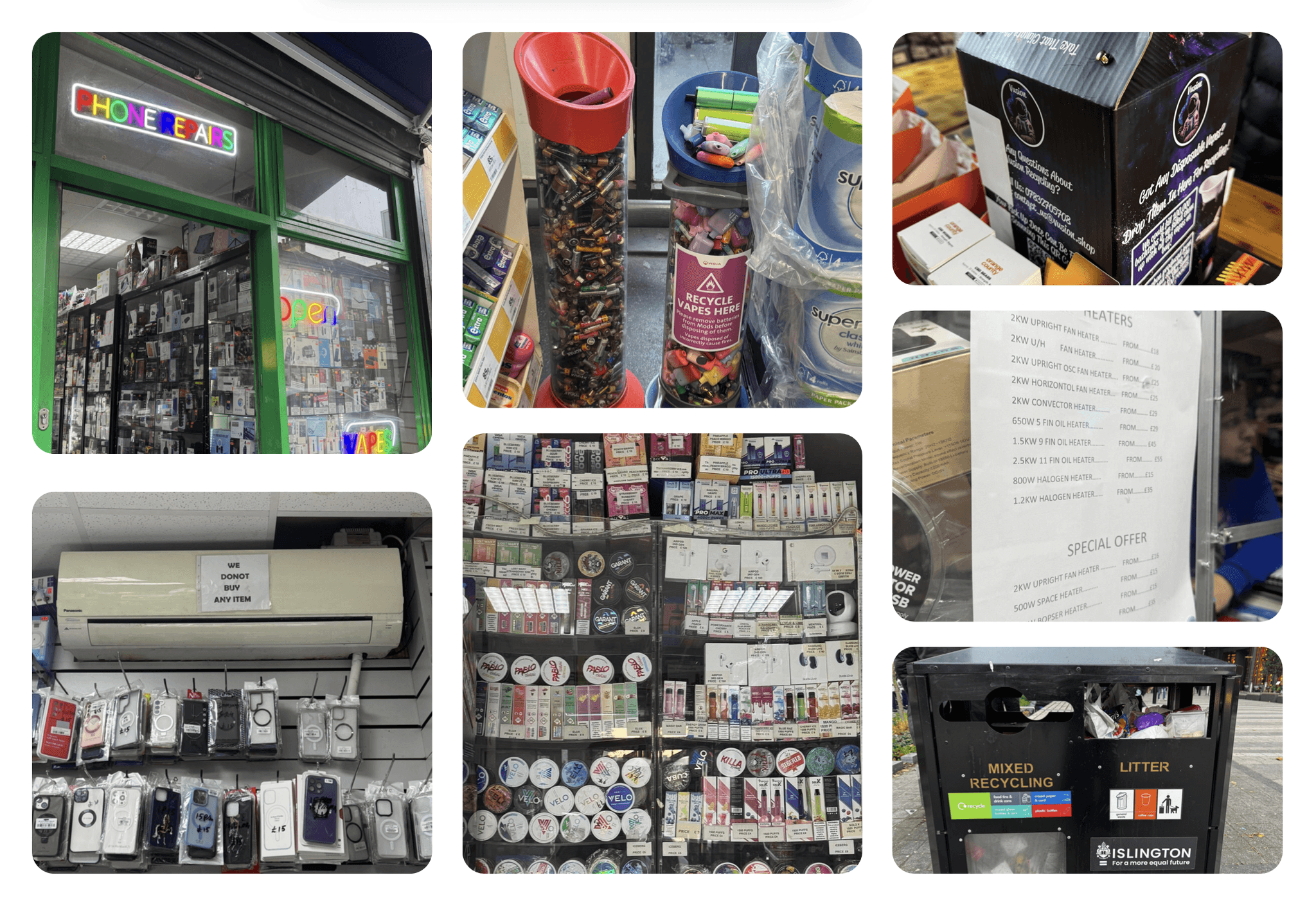
Our ethnographic research across vape shops, device repair shops, and Sainsbury Local revealed diverse e-waste practices, with limited recycling options and varying levels of consumer awareness.
Observations showed inconsistent disposal facilities, and staff and patrons displayed a blend of concern and indifference toward e-waste impacts.
Contextual Inquiry
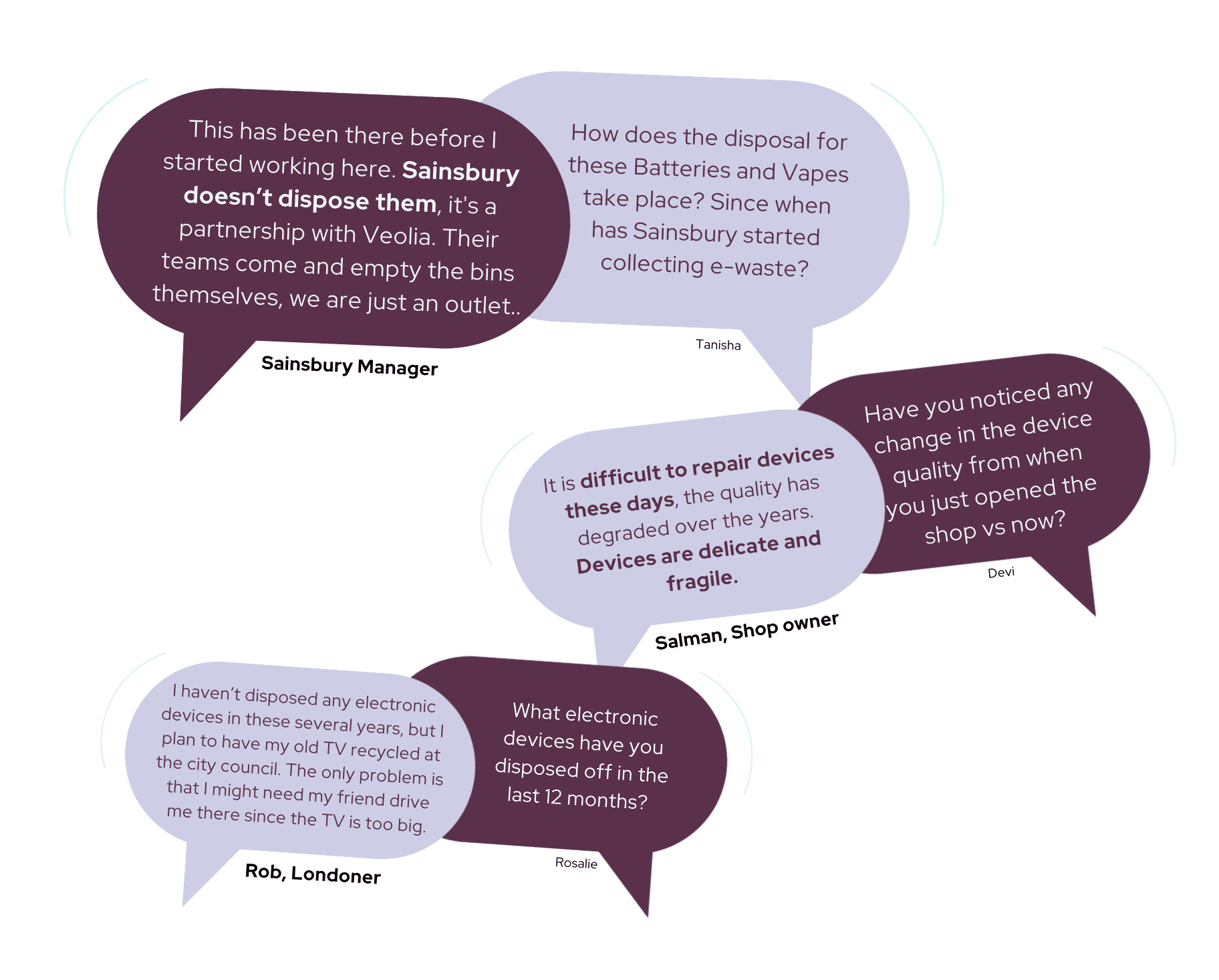
We engaged with a Sainsbury branch manager, repair shop owner and staff. We observed a mix of behaviours, from cautious interest to visible frustration about e-waste and its disposal.
Participants highlighted challenges tedious recycling options, uncertainty around electronics disposal, and more e-waste solutions in their communities.
The inquiry revealed a common concern for environmental impact but also a gap in practical knowledge and resources for sustainable disposal practices.
Interviews
"I make sure it is cost effective for the customer, I make them happy and they make me happy."
- Salman, Repair shop owner
“In this country, most mobile repair issue is charging port due to the constant rainy weather."
- Ahmed, Staff Nano Phone Express
“I frankly never gave E-waste disposal much thought”
- Savannah, Architecture student
"Electrics is simple its what you can/cannot do. It's a luxury. You know what you need when you need it."
- Jim, Staff LVC Repair Store
Questionnaire
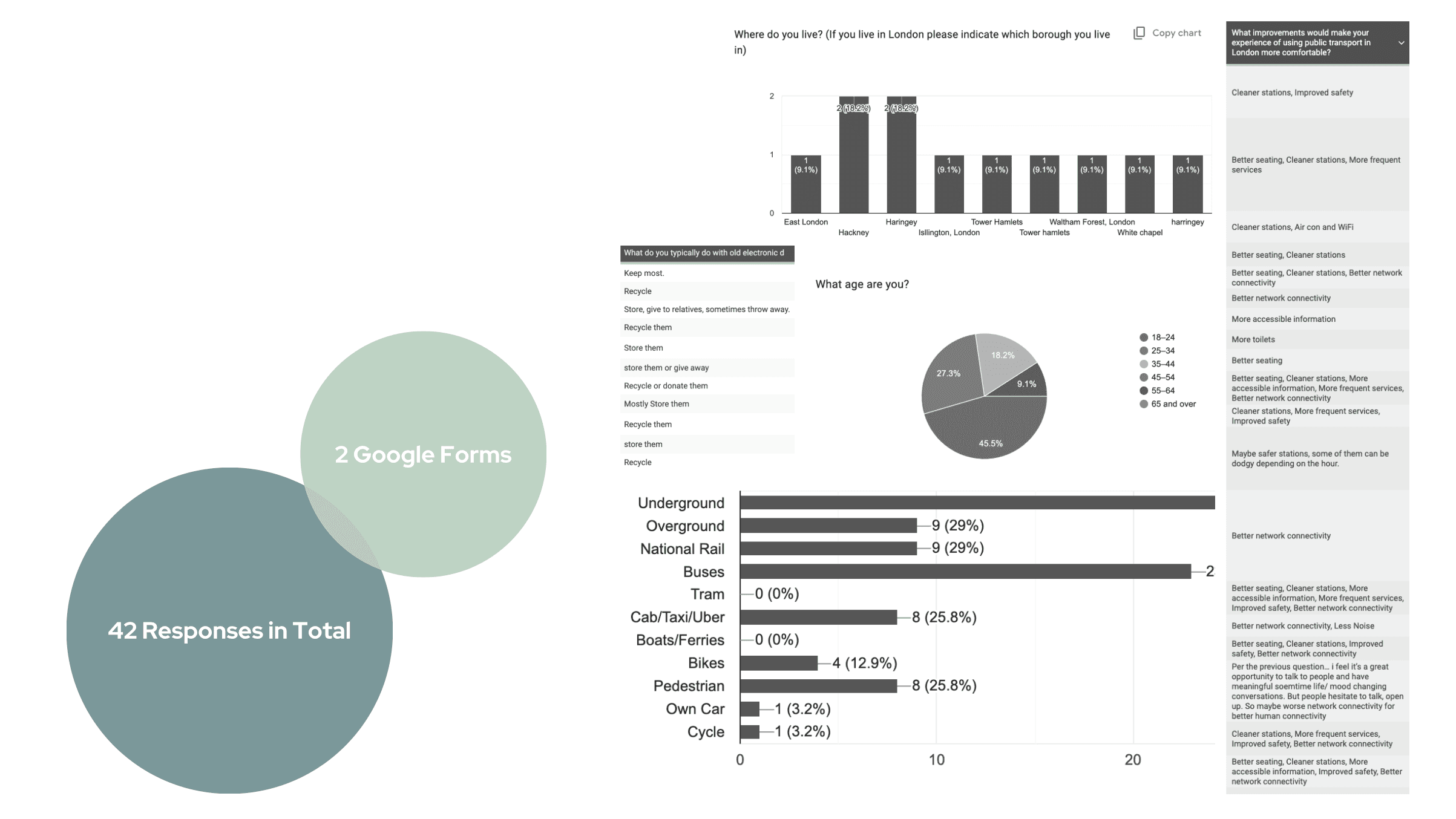
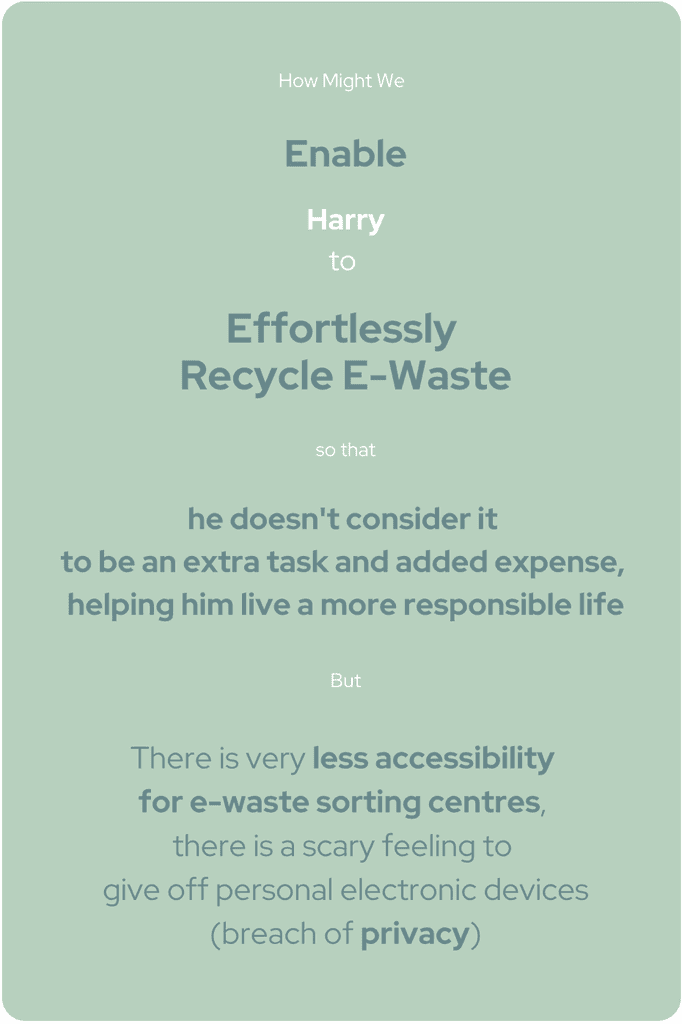
From our questionnaire, we identified that distance and convenience to drop off e-waste at the recycling centres were a major hinderance to proper e-waste recycling.
Concerns regarding data privacy also prevailed for personal devices. Though larger appliances were repaired often, disposing them off at recycling centres was inconvenient without a car. There were still people who lacked awareness on e-waste, its disposal and recycling.
Personas
Pain Points

Ideation
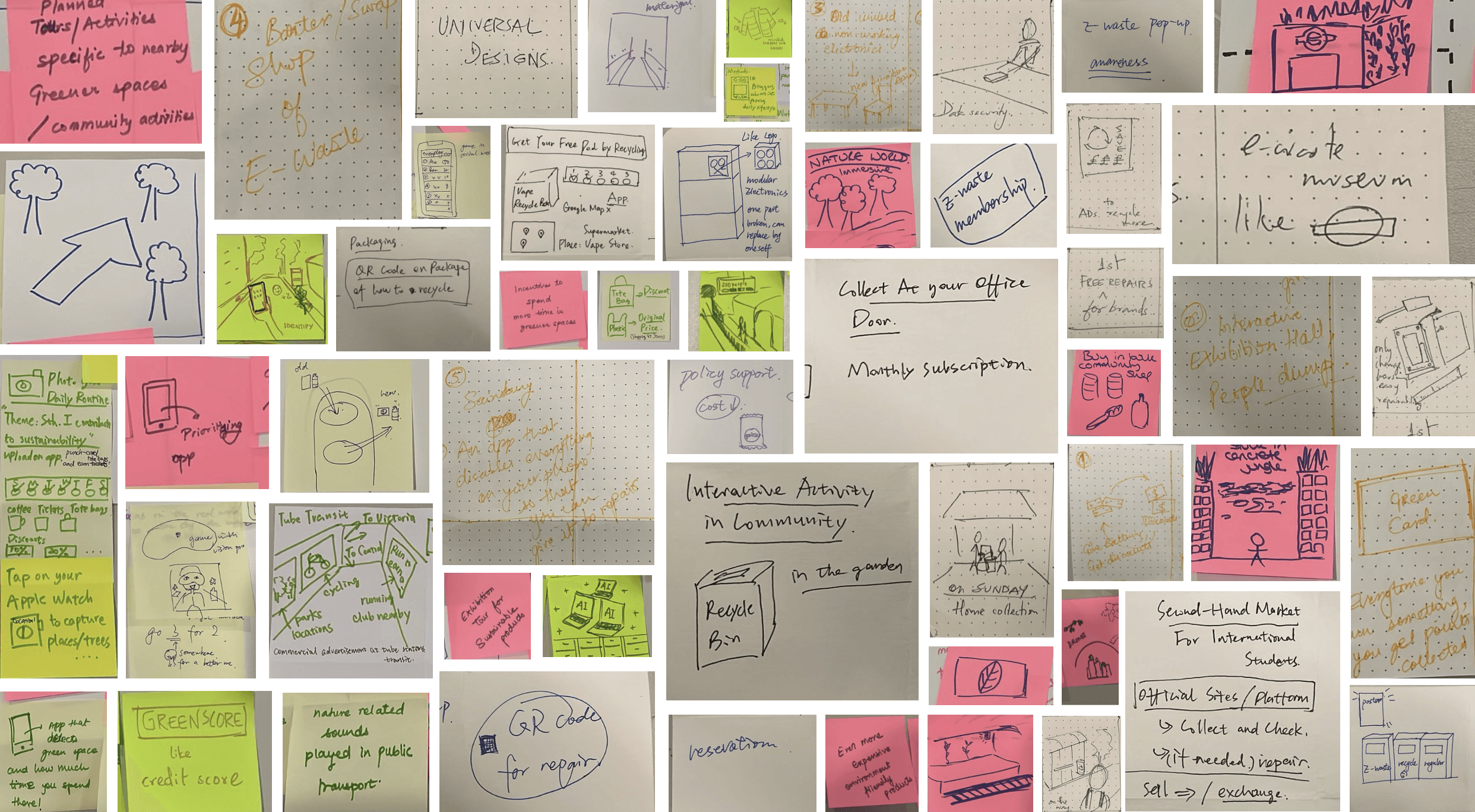
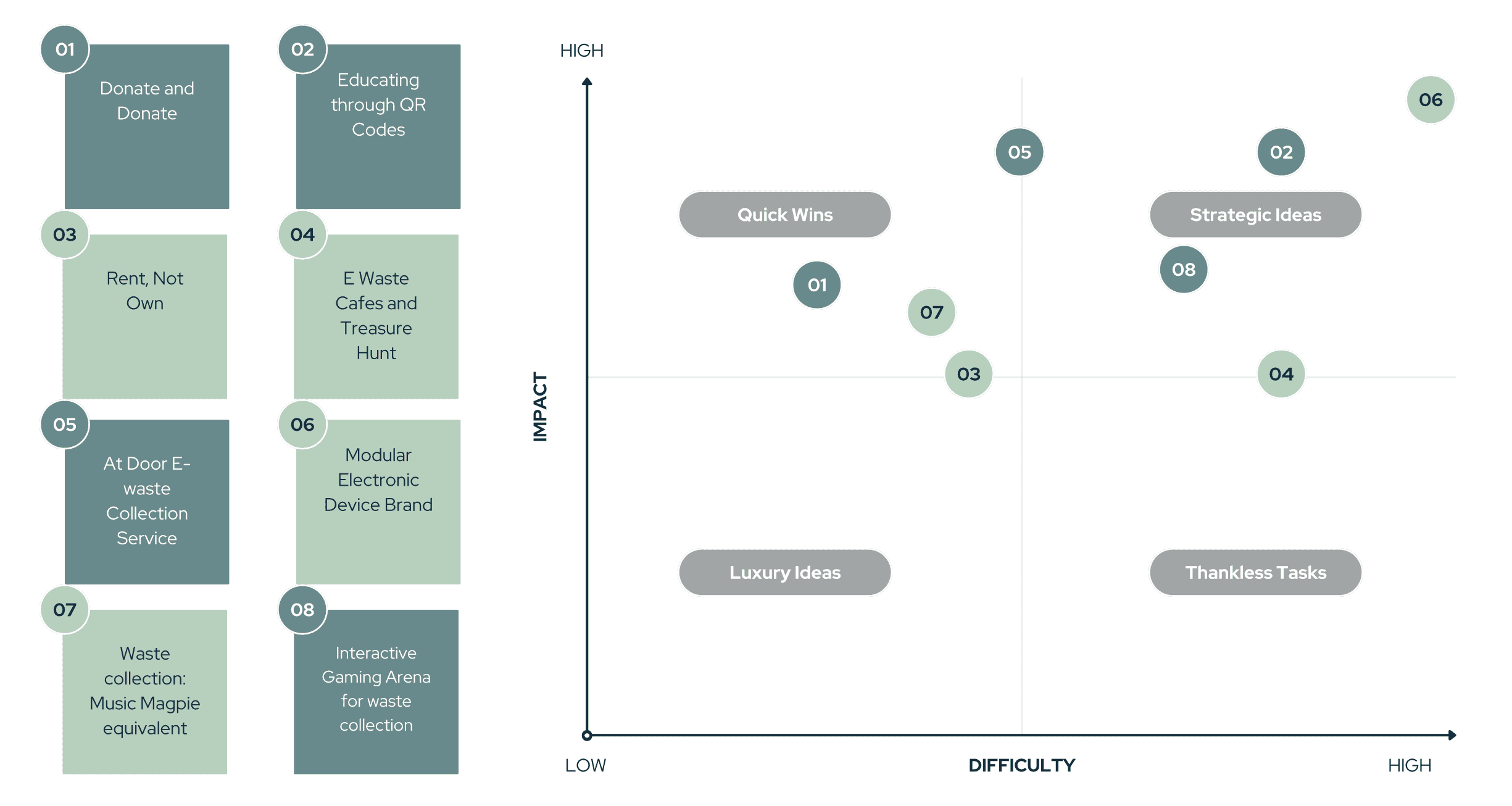
We used Crazy 8’s technique for ideation and used an impact matrix to evaluate the proposed solutions on an Individual level, Manufacturer level and Community level.
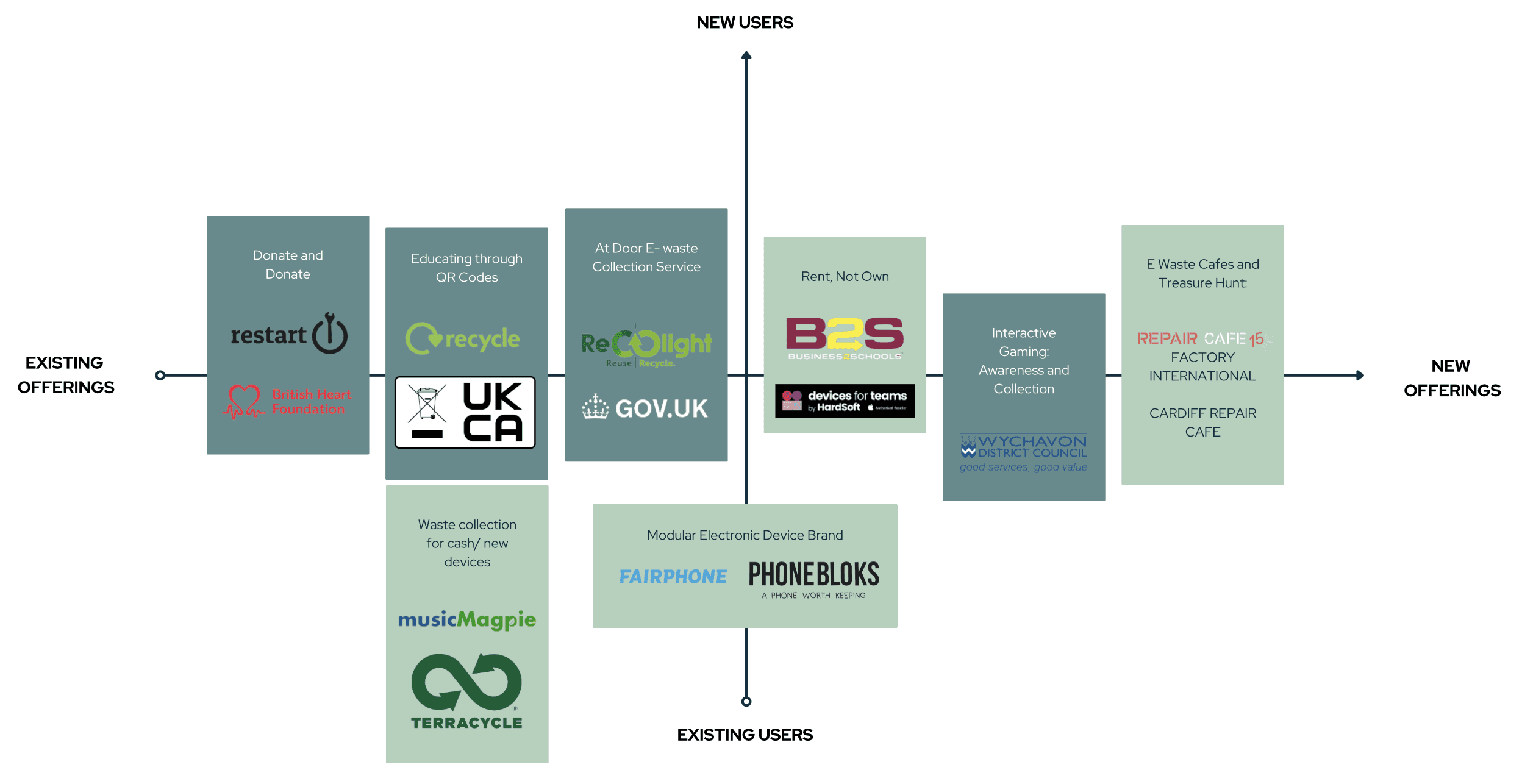
Later, the Innovation matrix revealed the gaps in existing solutions around e-waste repair and recycling in the UK along with validating the scope of our solutions in the real world.

Concept Evaluation & Innovation Matrix
Ideas
Feasibility
Repair cafes & Upcycling workshops
Campaigns by local organisations, schools, environmentally conscious groups
Viability
Government grants
The Mayor of London’s environment team
Rely on community spaces and volunteers
Desirability
Engaging community driven activities
Empowering with new skills through gamification
Education with entertainment for families, students and individuals
Feasibility
QR code technology
Blockchain systems
Recycling points
Viability
Initial investment
Revenue generation through recycling valuable materials
Environment friendly e-waste management
Desirability
Higher cost for sustainable services
Regulatory compliance
Data protection and privacy
Feasibility
Collection points and repair centres
Online platform
Viability
Secure device trade-ins
Refurbishment sales
Recycling fees
Partnerships with manufacturers and retailers
Desirability
Sustainable and ethical
Social enterprise creating jobs
Responsible e-waste disposal
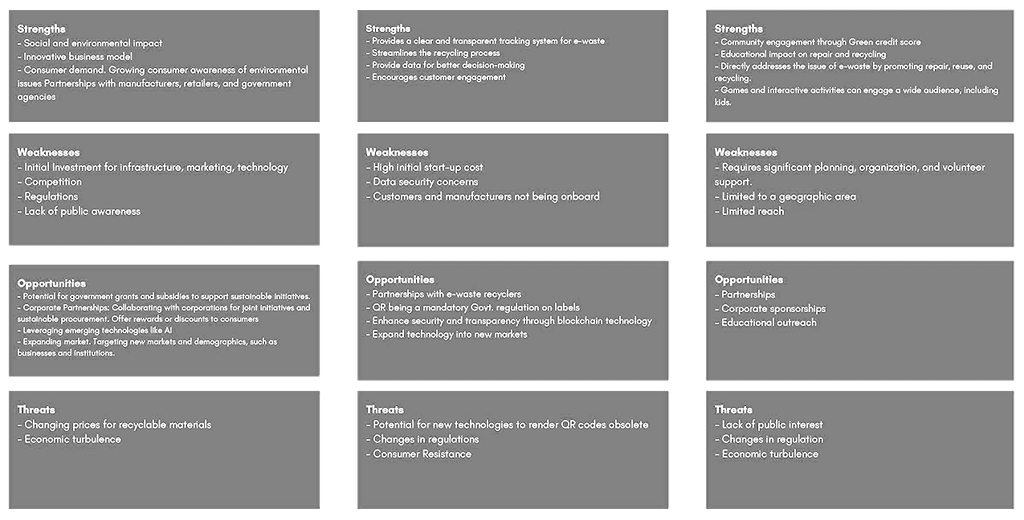
SWOT
GiveTech
EcoQR
E-Tribe
Urban E-Tribe
A service innovation project aimed at sustainable e-waste management in the city of London
Role:
Service Designer
Duration:
Nov 2024 - Dec 2024
Responsibilities:
Research, Team Management, Ideation, Systems Thinking
Context
Urban areas are struggling with e-waste mismanagement, driven by a lack of awareness, low trust in recycling systems, limited incentives, and fragmented access to product lifecycle information.
Brief
Design an actionable, sustainable service that encourages responsible e-waste disposal and extends the lifespan of electronic products.
Process
Ethnographic research conducted through field observations, surveys, and user journey mapping to identify behavioural barriers.
Design intervention at the individual, manufacturer, and community levels, a three-part system-based solution was suggested.:
E-Tribe — a community hub for workshops, repair support, and recycling games.
EcoQR — a unified QR-based tool for consumer education, repair access, and product traceability.
Give-Tech — a service promoting device donation, refurbishment, and reuse with tangible user rewards.
Behavioural engagement through integrated gamification strategies like "Weigh & Win" and e-waste treasure hunts to drive engagement across demographics.
Solution
Circularity Focus : The solution addressed critical barriers, improving awareness, trust, and participation in responsible e-waste practices. It fostered community-led circularity, extended device lifecycles, and proposed a replicable model for reducing urban e-waste’s environmental impact.
Climate Action & Sustainability
Knowledge Mapping
The project started with an extensive knowledge mapping around sustainability and climate change, where we finally focussed on E-waste for our research.
The team went through multiple topic pivots in an agile manner through phases of research, define and ideation.
E-waste
Types of E-waste
Secondary research
Netnography and Autoethnopraphy being the first steps of research, we designed our experience tours for primary research to capture more insights based on our preliminary assumptions.
The most common hazardous electronic items include LCD desktop monitors, LCD televisions, Plasma televisions, TVs and computers with Cathode Ray Tubes
The UK Government has set a target to achieve zero e-waste to landfill by 2030
Households produce more
than 400,000 tonnes of
e-waste each year
Research Methodologies
Qualitative & Quantitative Methods
Ethnographic Research
& Unobtrusive Observation
Our ethnographic research across vape shops, device repair shops, and Sainsbury Local revealed diverse e-waste practices, with limited recycling options and varying levels of consumer awareness.
Observations showed inconsistent disposal facilities, and staff and patrons displayed a blend of concern and indifference toward e-waste impacts.
Contextual Inquiry
We engaged with a Sainsbury branch manager, repair shop owner and staff. We observed a mix of behaviours, from cautious interest to visible frustration about e-waste and its disposal.
Participants highlighted challenges tedious recycling options, uncertainty around electronics disposal, and more e-waste solutions in their communities.
The inquiry revealed a common concern for environmental impact but also a gap in practical knowledge and resources for sustainable disposal practices.
Interviews
"I make sure it is cost effective for the customer, I make them happy and they make me happy."
- Salman, Repair shop owner
“In this country, most mobile repair issue is charging port due to the constant rainy weather."
- Ahmed, Staff Nano Phone Express
“I frankly never gave E-waste disposal much thought”
- Savannah, Architecture student
"Electrics is simple its what you can/cannot do. It's a luxury. You know what you need when you need it."
- Jim, Staff LVC Repair Store
Questionnaire
From our questionnaire, we identified that distance and convenience to drop off e-waste at the recycling centres were a major hinderance to proper e-waste recycling.
Concerns regarding data privacy also prevailed for personal devices. Though larger appliances were repaired often, disposing them off at recycling centres was inconvenient without a car. There were still people who lacked awareness on e-waste, its disposal and recycling.
Personas
Pain Points
Ideation
We used Crazy 8’s technique for ideation and used an impact matrix to evaluate the proposed solutions on an Individual level, Manufacturer level and Community level.
Later, the Innovation matrix revealed the gaps in existing solutions around e-waste repair and recycling in the UK along with validating the scope of our solutions in the real world.
Concept Evaluation & Innovation Matrix
Ideas
Feasibility
Repair cafes & Upcycling workshops
Campaigns by local organisations, schools, environmentally conscious groups
Viability
Government grants
The Mayor of London’s environment team
Rely on community spaces and volunteers
Desirability
Engaging community driven activities
Empowering with new skills through gamification
Education with entertainment for families, students and individuals
Feasibility
QR code technology
Blockchain systems
Recycling points
Viability
Initial investment
Revenue generation through recycling valuable materials
Environment friendly e-waste management
Desirability
Higher cost for sustainable services
Regulatory compliance
Data protection and privacy
Feasibility
Collection points and repair centres
Online platform
Viability
Secure device trade-ins
Refurbishment sales
Recycling fees
Partnerships with manufacturers and retailers
Desirability
Sustainable and ethical
Social enterprise creating jobs
Responsible e-waste disposal
SWOT
GiveTech
EcoQR
E-Tribe